Kitchen cleaning and disinfection plan: method and a template to copy
Editorial lead: The Kit Certif team
A cleaning and disinfection plan is the part of the French sanitary control plan (plan de maîtrise sanitaire, PMS) that states, for every area and piece of equipment in the kitchen: what to clean, who does it, when, how, with which product, and how it is checked. It must match your actual premises, equipment and products. Below you will find a copyable table template, followed by the record sheet that goes with it.
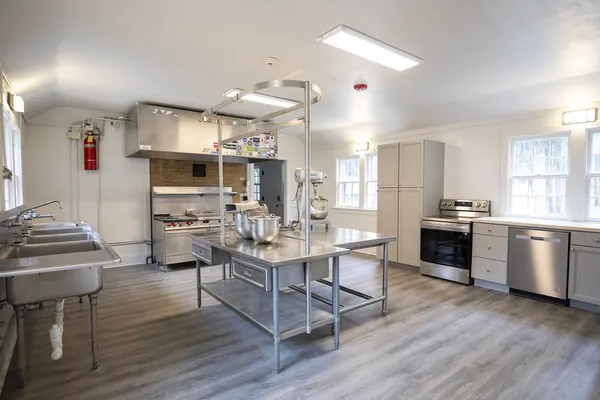
Many establishments display a plan picked up elsewhere, listing a product that is not in the store room or a slicer the kitchen does not own. That is the first flaw an inspector spots. The plan is only worth something if it describes what the team really does.
What the regulation requires
Regulation (EC) no. 852/2004 on the hygiene of foodstuffs does not mention a “cleaning plan” as such, but its Annex II sets what it must deliver:
- premises must be kept clean and in good repair;
- surfaces in contact with food must be easy to clean and, where necessary, to disinfect;
- equipment must be effectively cleaned and, where necessary, disinfected, frequently enough to avoid any risk of contamination;
- cleaning and disinfecting agents must not be stored in areas where food is handled.
In France these requirements sit within the sanitary control plan (PMS), in its “good hygiene practice” pillar. The cleaning plan is a core piece of it, alongside temperature records, traceability and procedures based on the 7 HACCP principles. If you are building the PMS from scratch, start with our method for writing your sanitary control plan.
Clean, then disinfect: order matters
A standard protocol runs in six stages:
- Prepare: clear food away, unplug appliances, remove waste and large debris.
- Clean: apply the detergent with mechanical action (brush, cloth, squeegee).
- Rinse with drinking water to remove detergent and loosened soil.
- Disinfect: apply the disinfectant at the dilution and for the contact time stated by the manufacturer.
- Rinse if the label requires it, which is common for food-contact surfaces.
- Dry in the air or with single-use wipes.
Four factors drive the result: contact time, mechanical action, product chemistry and temperature. If one drops, the others must make up for it.
Research confirms that cleaning alone is not enough and that mechanical action matters a great deal. In trials run in a food factory, Gibson, Taylor, Hall and Holah measured that cleaning reduced the bacterial population attached to surfaces by only about 0.9 log, and that methods with a high degree of mechanical action (high-pressure spray, mechanical floor scrubber) were the most effective at removing a biofilm (Journal of Applied Microbiology, 1999, see the study). Hence the place of disinfection after cleaning, and the value of writing the expected action into the plan, not just the product.
Choosing and managing products
Disinfectants for food-contact surfaces fall under the EU biocides regulation (Regulation (EU) no. 528/2012, product type 4). In practice:
- check on the technical data sheet that the product is approved for food contact and claims efficacy under suitable European standards (for example EN 1276 for bactericidal activity, EN 13697 for surfaces);
- write the dilution, contact time and any rinsing requirement into the plan;
- keep the safety data sheets available to staff;
- store products away from food-handling areas, in their original packaging.
The method: six questions per line
Every line of the plan answers six questions. That is what makes it usable by a new employee without verbal explanation.
| Question | What to write | Example |
|---|---|---|
| What? | The area or equipment, precisely | Stainless-steel worktop at the cold station |
| Who? | The responsible role (not a first name) | Cold-station commis |
| When? | Frequency and timing | After each production run and at end of service |
| How? | The steps, in order | Clear, wash, rinse, disinfect, rinse, dry |
| With what? | Product, dilution, tools | Detergent-disinfectant at label dilution, single-use cloth |
| Check? | Who checks, how, how often | Daily visual check by the chef, initialled on the sheet |
Cleaning and disinfection plan template to copy
The table below is an example to adapt. Frequencies are indicative: your sector’s good hygiene practice guide and your own risk analysis take precedence. Copy it into a spreadsheet, replace the products with those in your store room, then export it as a PDF to display.
| Area / equipment | Frequency | Method | Product and dilution | Responsible | Check |
|---|---|---|---|---|---|
| Worktops | After each use + end of service | Clean, rinse, disinfect, rinse if required, dry | [your detergent-disinfectant, label dilution] | Station staff | Daily visual |
| Chopping boards, utensils | After each use | Dishwasher or manual washing with disinfection | [dishwashing product] | Dishwasher | Daily visual |
| Slicer, food processor, blender | After each use | Dismantle, clean, disinfect, reassemble dry | [product] | User | Visual by the chef |
| Handles, switches, taps | Daily, more if needed | Wipe with surface disinfectant | [product] | Closing staff | Visual |
| Fridges, cold rooms | Weekly (and when soiled) | Empty, clean, disinfect, dry, restock | [product] | Section chef | Weekly sheet |
| Oven, hobs, fryer | Daily / according to use | Degrease per manufacturer instructions | [degreaser] | Cook | Visual |
| Extractor hood and filters | According to use (filters often weekly) | Dismantle, degrease, rinse | [degreaser] | Designated person | Sheet |
| Floors, drains | Daily at end of service | Damp sweep, wash, disinfect, squeegee | [floor product] | Closing staff | Visual |
| Bins and waste area | Daily / weekly | Empty, wash, disinfect | [product] | Closing staff | Sheet |
| Hand-wash basins | Daily | Clean, disinfect, restock soap and towels | [product] | Closing staff | Visual |
| Walls, ceilings, shelving | Monthly or when soiled | Wash down, disinfect contact areas | [product] | Designated person | Monthly sheet |
Two lines are often forgotten: hand-contact points (cold-room handles, taps, switches, screens) and the cleaning equipment itself (cloths, brushes, squeegees), which must be clean, stored and kept separate by area.
Record and verify
A plan with no trace of execution proves nothing. Pair it with a simple record sheet, filled in at the time of the task:
| Date | Area / equipment | Done by (initials) | Time | Problem noted | Supervisor’s initials |
|---|---|---|---|---|---|
Visual checking is the minimum, but it has limits. Worsfold and Griffith, who assessed cleaning practice in British retail butchers’ shops using ATP bioluminescence, found that visual inspection generally underestimated the level of soiling on surfaces. They also listed as common defects the lack of written cleaning schedules and records, lack of training in the correct use of cleaning products, and overlooked hand-contact sites (International Journal of Environmental Health Research, 2001, see the study). Spot checks with ATP meters or contact plates and slides, depending on the size of the business, usefully complement the eye.
Finally, review the plan whenever equipment, products or the menu change, and date each version.
Mistakes that show up during inspections
- Generic plan: products or equipment that do not exist on the premises.
- Unrealistic frequencies: a plan nobody can keep ends up not being filled in.
- Sheets filled in after the fact, all in the same handwriting and the same pen.
- Disinfectant contact time ignored: sprayed and wiped off immediately.
- Products stored above the worktop or decanted into unlabelled bottles.
These are exactly the points an inspector observes; our article on the DDPP inspection and the sanitary control plan describes how the visit unfolds.
Take action
Walk round your kitchen with the template above and list every area, piece of equipment and product actually present: you will have a plan that fits your establishment within an hour. For the full framework, see our page HACCP and the sanitary control plan, and the complete HACCP guide (in French) to build the whole PMS.
Frequently asked questions
+Is a cleaning plan mandatory in a restaurant?
Regulation (EC) no. 852/2004 requires premises, surfaces and equipment in contact with food to be cleaned and, where necessary, disinfected often enough to avoid any contamination. The cleaning and disinfection plan is how you show that this obligation is organised: in France it belongs to the good-hygiene-practice part of the sanitary control plan (PMS), and it is one of the documents inspectors ask for.
+What is the difference between cleaning and disinfecting?
Cleaning removes visible soil and deposits with a detergent and mechanical action. Disinfecting reduces the remaining micro-organisms with a product of proven efficacy. Disinfection only works properly on a surface that has already been cleaned: the two steps follow each other, they do not replace each other, unless a combined detergent-disinfectant is used according to its instructions.
+Is there an official cleaning plan PDF?
There is no single template imposed by the French authorities. Each sector's good hygiene practice guide (GBPH) offers examples, and the template in this article can be copied into a spreadsheet and exported as a PDF. What matters is that it describes your actual areas, equipment and products, not those of a generic kitchen.
+How long should cleaning records be kept?
The European regulation sets no single retention period for these sheets. Common practice is to keep them long enough to show regular cleaning during an inspection, usually several months; your sector's good hygiene practice guide gives the reference to follow.